
The Realistic Timeline for a 1,000m² Office Relocation in Belgium


June 22, 2026
The Realistic Timeline for a 1,000m² Office Relocation in Belgium
Relocating to a new office is one of the most complex logistical challenges a company can face. Often, the required time is vastly underestimated by management. The desire to move by the next quarter invariably clashes with harsh reality. For a standard office space of one thousand square meters in Belgium, you should expect a total project duration of seven to eight months once the premises have been secured. Understanding where all this time goes is the first and most important step toward a smooth and stress-free transition. Let's examine the two major phases of this process in detail.
Phase 1: Preparation and Design (Average 3 months)
The most common mistake is thinking that only the physical construction works take time. However, the preparation phase is extremely intensive and requires quick, firm decisions from management. Once the new building has been selected, you first conduct a complete needs analysis and space planning during this three-month period. You must determine exactly how your teams work, how many desks are needed, and what the ideal ratio is between quiet workspaces and collaboration zones.
Next, the focus shifts entirely to the design process, where the initial mood boards evolve into final, technical architectural plans tailored to the chosen property. Finally, during these months, you must request detailed quotes from contractors and finalize budgets. Reviewing and signing off on these proposals on time is critical to ensuring that the selected contractors can begin work immediately after this phase concludes.
Phase 2: Works Execution (Average 4 to 5 months)
As soon as the contractors take over the site, the physical transformation begins and the countdown truly starts. A space of one thousand square meters typically requires four to five months of active construction. This obviously depends on the complexity of your design and the initial state of the building, whether it's a pure shell space or an already partially fitted office.
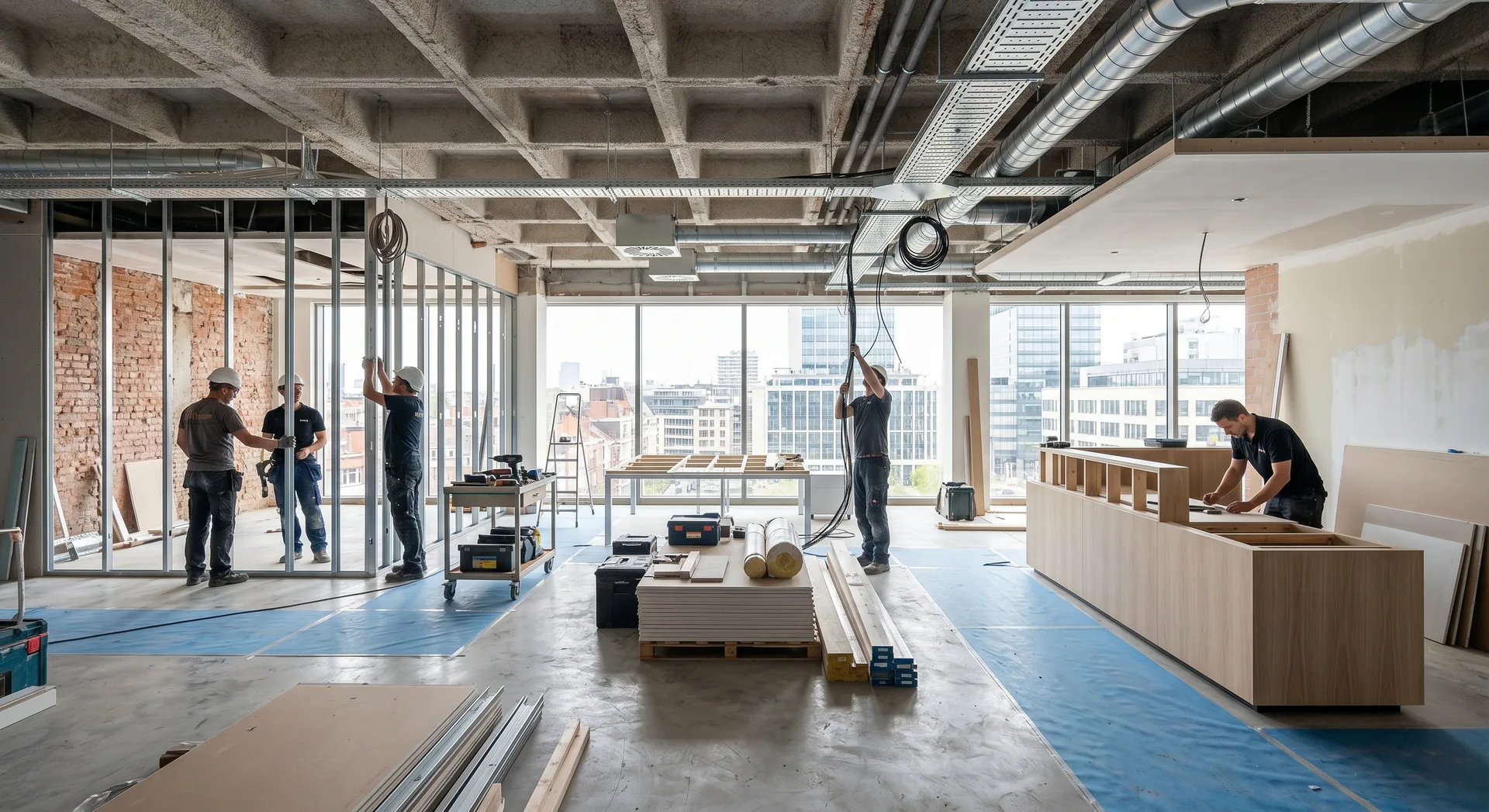
This execution phase always starts with demolition works and structural modifications to give shape to the new layout. Then comes the installation of technical equipment, such as plumbing, electricity, and ventilation, which, in practice, is often the most time-consuming part of the project. This is followed by the finishing phases, including flooring, painting, and the installation of custom elements like a reception desk or a kitchen island. In parallel, IT and audiovisual systems are integrated, with the pulling of network cables and the equipping of meeting rooms with screens and modern technology. The very last weeks are dedicated to furniture delivery and final handover, during which minor defects or "snags" are carefully corrected before your employees move in permanently.
The Key to Success
Delays in the early stages accumulate inexorably. The easiest way to jeopardize your relocation timeline is indecision during the preparation phase. By approving your designs and budgets strictly according to the established schedule, you protect the necessary four to five-month construction period and guarantee the successful delivery of your new work environment.