
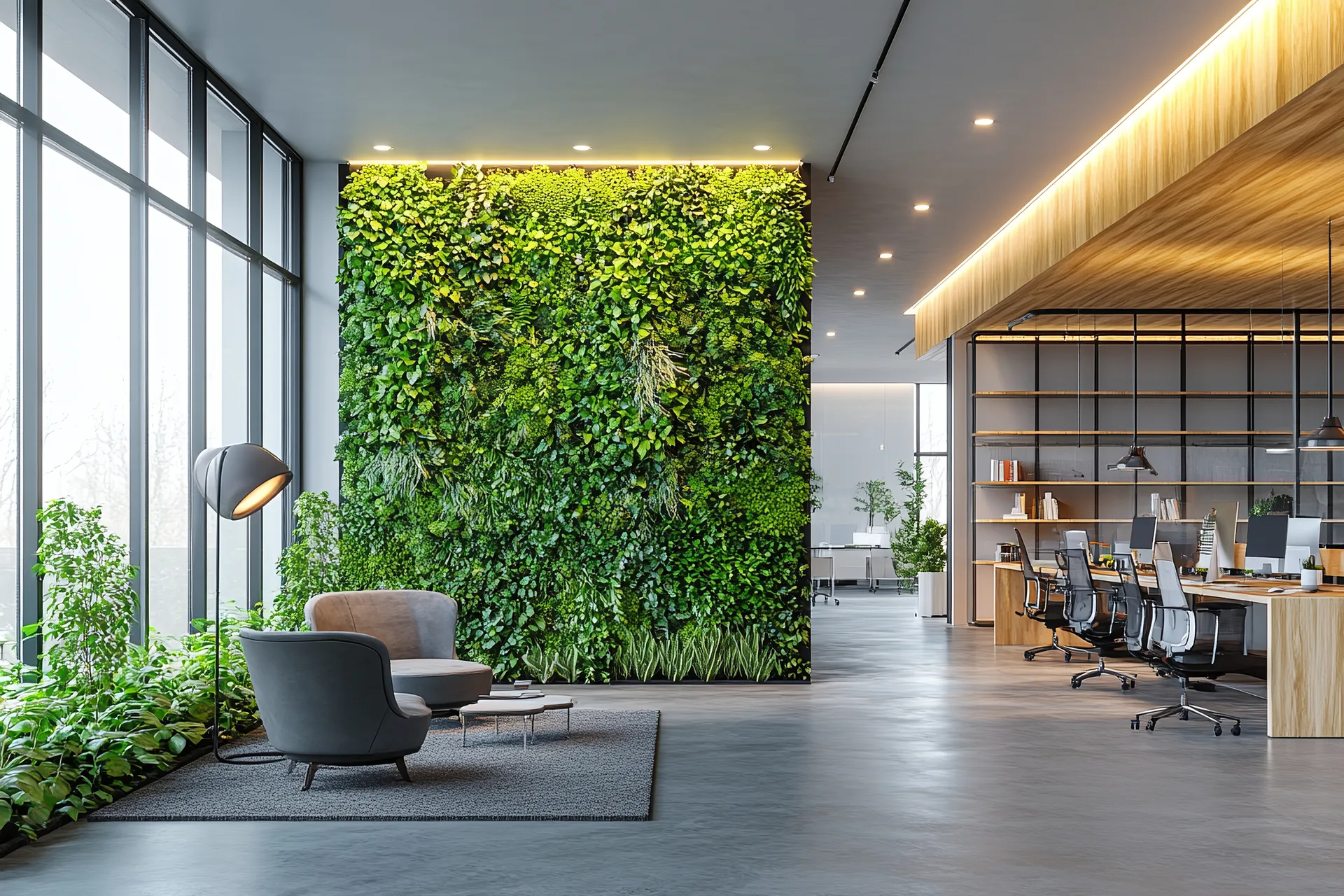
Enhancing the Workplace Through Nature


April 7, 2026
Enhancing the Workplace Through Nature
The Rise of Biophilic Design in the Office Environment
The integration of biophilic design into the interior of the workplace or office environment is rightfully receiving significant attention today. This innovative approach goes far beyond mere decoration; it is a strategic integration of natural elements and aesthetics to create an environment that nurtures both employees and productivity. By drawing inspiration from nature, biophilic design promotes a profound sense of well-being that has a direct impact on the overall success of a company. It speaks to our instinctive need for connection with the living world, which is essential in an increasingly digitalized work environment.
A Sensory Connection to the Natural World
Biophilic design transcends traditional aesthetics by actively engaging the senses and facilitating a deeper connection with the natural world. Incorporating elements such as filtered natural light, lush greenery, subtle water features, and organic materials does more than just enhance the visual appeal of the workplace. These elements work synergistically to noticeably improve air quality and lower overall stress levels within the organization. The result is a living workplace that breathes and moves with its users, rather than a static, sterile space.
Structurally Reducing Stress and Fatigue
Scientific research consistently confirms that environments enriched with natural elements significantly lower stress levels among employees. Implementing greenery, such as strategically placed indoor plants, vertical living walls, or internal courtyards, creates a calming atmosphere that strengthens mental resilience. The presence of natural light is an indispensable factor in this process. Workspaces with large windows not only offer expansive views but also help regulate the circadian rhythms of employees. This leads to higher levels of focus, increased alertness, and a structurally better mood, which translates directly into improved individual and collective performance.
Natural Elements as a Catalyst for Collaboration
Beyond individual well-being, biophilic design also stimulates social dynamics and innovation within teams. Open spaces that utilize natural textures, such as raw wood and natural stone, invite informal interactions and creative cross-pollination. Major technological leaders have already successfully embraced this principle by integrating roof gardens and water features into their office layouts. These inviting spaces act as sources of inspiration where employees feel free to share ideas. Companies that take this path see a remarkable increase in engagement, simply because the aesthetics of the space invite movement and dialogue.
A Strategic Tool Against Employee Turnover
An often underestimated advantage of a natural work environment is its positive impact on retention and absenteeism. Biophilic design is closely linked to a decrease in sick leave and lower employee turnover. By providing a healthier and visually more attractive work environment, an organization positions itself as an employer of choice for top talent. Employees feel valued and connected to a workplace that tangibly invests in their quality of life. An office that embraces nature communicates a caring corporate culture, which is a decisive factor for loyal staff in today's labor market.
The Power of a Future-Proof Strategy
In conclusion, biophilic design offers a multitude of benefits that touch the very core of business operations. By taking natural elements and aesthetics as a starting point, organizations create inspiring workplaces that boost productivity and stimulate creativity. As the societal demand for healthy and sustainable work environments continues to grow, this type of design stands out as a powerful strategy. It is a long-term investment in every organization's most valuable asset: the people who give their best every day.